Sermon notes for Proper 15B (8/16/2015)
(I rarely write my sermons completely so I don’t have a precise script of what I said during my homily. What I offer here are “Sermon Notes,” recollections of what I said, wanted to say, or should have said, all in retrospect.)
For generations in the Episcopal Church, members would receive Holy Communion only after they were confirmed, sometime around 13 years old. It was thought that by this age individuals would be well prepared and were suitably old enough to claim the faith for themselves, thus ready to comprehend the deeper meaning of eating the holy meal of the body and blood of Jesus. Some, however, wanted communion earlier and began to adopt the Roman Catholic “age of reason,” thus offering the first communion at age seven or eight. This view recognized that children of such an age could perhaps understand enough about the Lord’s Supper for it to have meaning for them. Others still believed in the rightness of the Orthodox tradition where the baptized, even babies, received communion upon their baptism. What is the proper age? When is old enough really old enough?
YOU GAVE FOOD TO EVERYONE ELSE!
A story from a friend of mine might prove instructive (at least it was for me). A priest in the Roman Catholic Church, Peter abided by his bishop’s directive to give communion to children only after they reached first grade, when they and their parents had received adequate instruction. Every Sunday, Peter’s five-year old nephew would come with his parents to Peter’s church. Every Sunday, his nephew would come forward to the altar at communion time, with his hands cupped and lifted to receive the body of Christ. Every Sunday, Peter would reach his hand down, touching his nephew’s head for a blessing.
Now, one day as Peter was reaching down his hands, his nephew pushed them away. Defiance on his face, the child shook his fist at him, “You give bread to everyone else! Why not me?”
I learned a lesson from that story when I heard it. You see, Peter’s nephew was able to understand that he was being excluded. Now, since he was old enough to sense the exclusion, imagine the understanding and sense of inclusion he would had being fed by Jesus along with the rest. I think that this might give credence to those who desire to open the table to all who come, to anyone who wants to eat of the bread life and drink from the cup of salvation. I think it’s the same theological perspective as baptizing infants: It’s not about what we initiate but what God initiates in us.
I think that feeding children the bread of heaven at the earliest age is a wonderful way to know the love of God and to feel the inclusion of the Christian community. It’s powerful to imagine children who have no memory of when they did not eat at the table of the Lord. It’s like the reality of a good parent’s love, the absence of which a child should never experience.
As to what children understand or when they are able to understand it, who knows? But I do know this, if we communicate children early, when the time comes they will understand – the sacrament of inclusion and belonging, the sacrament of love and self-giving.
THE FOOD THAT ENDURES
Jesus told us earlier in this monologue on the Bread of Life in John chapter 6, “Do not work for the food that perishes, but for the food that endures for eternal life, which the Son of Man will give you.”
Over the centuries, the “food that endures for eternal life” has been taken on a number of interpretations:
First, the food has come to be understood as “knowing God’s word.” When Jesus went into the wilderness, after fasting forty days and forty nights, Satan tempted him to turn stone into bread to feed his incredible hunger. Jesus responded, “It is written, ‘One does not live on bread alone, but by every word that comes from the mouth of God’” (Matthew 4:4). This means that we must strive to know and understand, to treasure and put into practice all the words that come from the mouth of God.
Second, stemming from the first, the food has come to mean “doing God’s will.” Responding to his disciples who demanded that he eat, Jesus says, “My food is to do the will of him who sent me and to complete his work.” Therefore, just as we must strive after knowing the word of God, we must also strive after doing God’s word, i.e. doing God’s will. That’s why it’s not surprising that just a few verses earlier in the Bread of Life Discourse, Jesus announces, “For I have come down from heaven, not to do my own will, but the will of him who sent me. And this is the will of him who sent me, that I should lose nothing of all that he has given me, but raise it up at the last day” (John 6:38-39).
Finally, the food that has come down is the Eucharist. This is the food prophesied by the daily miracle of the manna during the Exodus. God rained down manna each day to feed the people of the covenant as they wandered in the desert before coming to the Promised Land. God now rains down Jesus, the Living Bread come down from heaven, our spiritual food in the Eucharist.
All three of these interpretations, of course, go hand-in-hand in the celebration of Holy Eucharist.
THE FOOD AND GOD'S WORD
We begin our Holy Eucharist, of course, with God’s word, uniting our story with the story of God in the sacred scripture. We hear the story. We learn the story. We enter the story. We become the story. It’s not really about any particular story or any particular combination of words. There is a lot more that could have been told but was left out, at least according to John (20:30). No, it’s not about the particular stories or words – those are important lessons but the real impact comes when we see the deeper connection with the Word that flowed from the mouth of God at creation, that was spoken to the prophets, and that came down from heaven, sent by the living Father, to be born of Mary. This is the Word that we must know, the words of sacred scripture will help lead the way.
THE FOOD AND HOSPITALITY
Our Mass ends with a sending, reminiscent of Matthew’s Gospel, “Go therefore…” (Matthew 28:16-20). We are sent to do the will of God: making disciples (Mathew 28:16-29), sharing stories and breaking bread (Luke 24:13-35), washing each other’s feet (John 13:1-20), loving our neighbors (Luke 10:25-37), and loving our enemies (Matthew 5:44), among much more. From beginning to end, the Bread of Life Discourse resonates with the tones, subtle and obvious, of Passover and Eucharist. Indeed, there is great and undeniable significance found in the promised abundance of abiding and eternal life, found through Jesus, shown in his life and death, offered for us and to us. But there is equal significance in the needed appropriation of that gift, the ways in which and by which the life and death of Jesus are woven into our own being in the world.
The lesson from Wisdom today demonstrates some of that by showing a deeply inviting hospitality. Lady Wisdom prepares a great feast, setting her table, available to all those who seek insight into her ways and paths. The picture awakens in me the hospitality of Abraham by the terebinths of Mare, when he laid out a feast for the angelic visitors in the desert. It was there, in the midst of their hospitality, that Sarah and Abraham were made the promise of their inheritance – their eternal life through their son Isaac. It wasn’t because of their hospitality that the covenant was made and it’s not because of our hospitality that eternal life is given, but hospitality sure makes it easier to see the Lord and hear the promise.
The banquet of Wisdom and the scenes of feeding and giving in John 6 haunt us haunts us their abiding hospitality, allusions to God’s gifts and declarations of God’s love. The manna in the wilderness, God’s hospitality to the Israelites on the long journey through the inhospitable places, is where the People of God came to terms with their departure from Egypt and their deliverance and the invitation to freedom. The inhospitable desert is where they learned new things about God’s hospitality and looked forward to life in the world to come of the Promised Land.
May all our Eucharists show forth to ourselves and to others the hospitality of our God in the long journeys of life. May our lives grow ever deeper into the self-offering of our Savior Jesus, so that we can offer ourselves and the fruits of our lives and labors to others in his name.
THE FOOD AND OUR EUCHARIST
And finally, after the Word is spoken but before we are sent, the Eucharist is made and shared. It is our Manna, our Bread of Life. The second century church father, Irenaeus, said it this way: “The word of God, Jesus Christ, on account of his great love for mankind, became what we are in order to make us what he is himself.”
Feeding on the body and blood of Christ is life-sustaining nutrition, food for the soul. By faith, we eat the bread and drink the wine, thus enabling the process by which Christ penetrates our beings and nourishes our lives. We are what we eat. And so In this sacrament, God’s very life comes to us and in us. We have union with God, re-called to the truth that this union with God through Jesus, the Christ, is the connecting link for us with all that is good and true and holy.
It is here that we have the awesome privilege of receiving the Word made Flesh, God’s daily spiritual manna, in the Eucharist. We become one body with Christ in the Eucharist, restoring us and making us one with the Word and able to accomplish his will. United with Christ our head, we become his hands, his feet, and his heart in the world.
In the end, the living bread that sustains us should always be our quest: Jesus, whose prayer, mind and deeds show us what to do – Jesus whose flesh and blood instill new life within us – Jesus who lives in us that we might live forever.
“Give us grace to receive thankfully the fruits of his redeeming work and to follow in the blessed steps of his most holy life.” (from the Gathering Collect, Proper 15, BCP 232).
Monday, August 17, 2015

Monday, August 10, 2015
The Bread of Life
Sermon notes for Proper 14B (8/9/2015)
(I rarely write my sermons completely so I don’t have a precise script of what I said during my homily. What I offer here are “Sermon Notes,” recollections of what I said, wanted to say, or should have said, all in retrospect.)
Note: The last section, "Edith Stein," was not preached in the homily on August 2. I decided to include some reflections on Edith Stein after reading some of her writings this morning during my devotions. Saint Edith Stein (Saint Benedicta of the Cross) has her feast day on August 9 but I put off reading her until this morning, August 10. I only wish I had remembered last week so that I could have brought forth some of her beautiful poems on the Eucharist`during my homily on the Bread of Life. I hope that you enjoy them now.
ELIJAH, EXODUS, AND EUCHARIST
(I rarely write my sermons completely so I don’t have a precise script of what I said during my homily. What I offer here are “Sermon Notes,” recollections of what I said, wanted to say, or should have said, all in retrospect.)
Note: The last section, "Edith Stein," was not preached in the homily on August 2. I decided to include some reflections on Edith Stein after reading some of her writings this morning during my devotions. Saint Edith Stein (Saint Benedicta of the Cross) has her feast day on August 9 but I put off reading her until this morning, August 10. I only wish I had remembered last week so that I could have brought forth some of her beautiful poems on the Eucharist`during my homily on the Bread of Life. I hope that you enjoy them now.
There is no food more universal or more essential than
bread. Bread, in one form or another, is beyond question the most basic form of
food in practically every human society, past or present, so much so that it is
often called "The Staff of Life." Humans have been enjoying a form of
bread since the Neolithic age when cereals were crushed then mixed with water
to form a paste which was then baked on a hot stone. Fossilized cakes of bread
have even been found in a number of ancient archaeological sites. A food that has
long been a staple in most civilizations, bread has quite significant cultural,
social, and religious significance.
BREAD
In Bible terms, "bread" is sometimes used to refer
to food in general and is also often used symbolically. The very first foods
mentioned in Genesis were seed-bearing fruits and every plant yielding seed (Genesis
1:29). The very stuff of sustenance, humanity’s basic foodstuff, was bread. When
God pronounced the curse on the man in Genesis 3, God said, "By the sweat
of your face you shall eat bread, until you return to the ground." (Genesis
3:19).
Bread is the very core of life. What does bread mean to you?
- Is it a dark English brown bread, chewy and sweet. You might still taste the whole oats mixed into the dough. A bit of marmalade spread on top makes it quite pleasant with a cup of English breakfast tea.
- Perhaps what comes to mind is the Scottish bap, a soft and airy roll. Quite the opposite of its people, both are filled with the goodness of life.
- Maybe you think of a French baguette, snapped in half and shared with a friend over a bowl of caffe au lait.
- Or maybe you consider the quintessential Belgian croissant: soft, flaky, and buttery.
- Possibly, you will consider the heavy and hardy German pumpernickel, slathered in butter and slightly sweet from the whole rye berries inside.
- Maybe a Yiddish bagel comes to mind. Boiled and baked, dense with flavor, they are especially good with a smear or some lox with cream cheese.
- Maybe you want an Irish potato bread, which is more potato than grain. Fry it in bacon fat for a great comfort on a rainy Irish day.
- An Austrian rye bread with sunflower and pumpkin seeds might be your thing, crunchy and delicious with a glass of beer.
- Maybe, like me, you think of an Italian hard roll. The crust of that bread might break a tooth but once inside…put it this way: When God looked over all that he had made and saw that it was good, God could very well have been noticing the Italian hard roll. That is some goodness.
- In Florida especially, one might think of a Cuban bread with its bleached white flour and pure, unadulterated lard!! I tell you, though, eat that bread with a cup of dark black, slightly sweetened Cuban coffee, and you have a fine breakfast.
- Perhaps you recall New England’s Anadama bread, the friendship bread from Ammish country, a southern beaten biscuit, some country cornbread, a muffuletta from New Orelans, a San Francisco sourdough, or Boston’s scali bread.
- Maybe you recall your mother-in-law’s recipe for rolls in the oven: one part butter to one part everything else. Thanks Molly!
ELIJAH, EXODUS, AND EUCHARIST
Yes, bread in all its forms is important to our lives and to
our living. In Christian terms bread is a vital and important metaphor. Searching
for the word "bread" in an online bible yielded me 325 matches
(NRSV on bible.oremus.org). Indeed, Jesus’ own ministry was built on the rich
foundation of many stories of feeding and being fed.
In today's reading from 1 Kings, Elijah has set out on a journey
on which he will be sustained by the gift of the angel of the Lord: bread! Not
just once, but twice does the angel feed him, commanding him: “Get up and eat!”
The food that Elijah was given was bread, with which he was able to go “in the strength of that food
forty days and forty nights to Horeb the mount of God” (1 Kings 19:8)
The book of Exodus reminds us that when the Jews were lost
and starving in the desert God fed them with manna, the bread from heaven. For forty
years, they could neither plant nor harvest but God "gave them food
from heaven in abundance" (Psalm 105:40). That was the
wonderful manna, which miraculously “rained down on them,” the “grain of heaven…the
bread of angels” (Psalm 78:24-25).
Years later, when God became man in Jesus the Christ,
born of Mary, the Jews challenged Jesus to give them a sign, such as Moses had
given when he called for God to send the manna (John 6:30). Note the
astounding response given them by the Lord Jesus:
‘Very truly, I tell you, it was not Moses who gave you the bread from heaven, but it is my Father who gives you the true bread from heaven. For the bread of God is that which comes down from heaven and gives life to the world.’ (John 6:32-33).
Then the people clamored for the bread to which Jesus
responds,
‘I am the bread of life. Whoever comes to me will never be hungry, and whoever believes in me will never be thirsty… Very truly, I tell you, whoever believes has eternal life. I am the bread of life. Your ancestors ate the manna in the wilderness, and they died. This is the bread that comes down from heaven, so that one may eat of it and not die. I am the living bread that came down from heaven. Whoever eats of this bread will live for ever; and the bread that I will give for the life of the world is my flesh.’ (John 6:35, 47-51).
As with Elijah in the first reading and like Israel in he desert, God realizes that the journey would be too much for us if we were not nourished. But for us, in the final culmination of divine revelation in
Jesus, God does more than send an angel with a hearth cake and jug of water.
God even does more than rain manna down from heaven. Now, God’s own son Jesus gives
himself as our food and drink so that we can be strengthened
for the journey of each day toward the mountain of God, not Horeb but the
celestial Jerusalem.
The Lord in the Eucharist makes it possible for us to see
divine goodness and to taste it in the supreme gift. In the New Testament Jesus uses bread as the ultimate sacrament,
his body blessed and broken and shared. After more than two millennia this is
still a reality – a memoria practiced in Holy Eucharist each Sunday. Today as
we prepare to receive this greatest of gifts, the body and blood, soul and divinity
of Jesus the Christ, may it be for us a strength to remain faithful to the
journey, courageous to the end.
Christ gives his flesh for the life of the world, eternal
life that not even the gates of hell can prevail against. And we thank God
for allowing us to taste and see the goodness of the Lord. This is the
“living bread” come down from heaven so that we may eat of it and not die.
SAINT EDITH STEIN
August 9 marks the anniversary of the death of Saint Edith
Stein, also called by her Carmelite name
Saint Teresa Benedicta of the Cross, in
the Nazi Concentration Camp at Auschwitz. In one of her poems, entitled “I Will
Remain With You,” she pondered the great goodness of God incarnate that she
could taste and see. She wrote how she drew her very life, each and every day, from
the sacrifice of Jesus, every day. Pondering the heart of Jesus’ love in
the Holy Eucharist, she wrote:
This Heart, it beats for us in a small tabernacle
Where it remains mysteriously hidden
In that still, white host.
That is your royal throne on earth, O Lord,
Which visibly you have erected for us,
And you are pleased when I approach it.
Full of love, you sink your gaze into mine
And bend your ear to my quiet words
And deeply fill my heart with peace.
Yet your love is not satisfied
With this exchange that could still lead to separation:
Your heart requires more.
You come to me as early morning’s meal each daybreak.
Your flesh and blood become food and drink for me
And something wonderful happens.
Your body mysteriously permeates mine
And your soul unites with mine:
I am no longer what once I was.
You come and go, but the seed
That you sowed for future glory, remains behind
Buried in this body of dust.
A luster of heaven remains in the soul,
A deep glow remains in the eyes,
A soaring in the tone of voice.
There remains the bond that binds heart to heart,
The stream of life that springs from yours
And animates each limb.
How wonderful are your gracious wonders!
All we can do is be amazed and stammer and fall silent
Because intellect and words fail.”
In her eassy, “Before the Face of
God,” she writes eloquently about the communion that is created when we partake of the Eucharistic feast.
We are made members of the Body of Christ by virtue of the sacrament in which Christ himself is present. When we partake of the sacrifice and receive Holy Communion and are nourished by the flesh and blood of Jesus, we ourselves become his flesh and his blood. And only if and insofar as we are members of his Body, can his Spirit quicken and govern us…We become members of the Body of Christ not only through love…but in all reality, through becoming one with his flesh: for this is effected through the food that he has given us in order to show us his longing for us.”
The Holy Spirit wants to enliven us but in order for that to
happen we must remain in communion with Christ in his body. The letter to the
Ephesians describes some of the ways we cut ourselves off from communion: “Put
away from you all bitterness and wrath and anger and wrangling and slander,
together with all malice…” (Ephesians 4:31). And then there is the description
of how the Holy Spirit seeks to quicken us: “...be kind to one another,
tender-hearted, forgiving one another, as God in Christ has forgiven you. Therefore
be imitators of God, as beloved children, and live in love, as Christ
loved us and gave himself up for us, a fragrant offering and sacrifice to
God” (Ephesians 4:32-5:2). The Holy Spirit seeks to help us to imitate God in
the way we treat each other, living in love and sacrificing ourselves in love
of God and others as a fragrant offering to God.
Monday, August 3, 2015
Dio era li. Dio e la.
Sermon notes for the Baptism of Bruce Joseph Barbree (Proper 13B, 8/2/2015)
(I rarely write my sermons completely so I don’t have a precise script of what I said during my homily. What I offer here are “Sermon Notes,” recollections of what I said, wanted to say, or should have said, all in retrospect.)
St. David’s is a baptizing church! Today we will baptize another, Bruce Joseph, welcoming him into the household of God. And you all should know by now that I love a baptism. Today I am reminded of a story of another Joseph, a boy in the church of my childhood who was baptized at age five.
(I rarely write my sermons completely so I don’t have a precise script of what I said during my homily. What I offer here are “Sermon Notes,” recollections of what I said, wanted to say, or should have said, all in retrospect.)
St. David’s is a baptizing church! Today we will baptize another, Bruce Joseph, welcoming him into the household of God. And you all should know by now that I love a baptism. Today I am reminded of a story of another Joseph, a boy in the church of my childhood who was baptized at age five.
CAN YOU SEE THE CROSS ON MY FOREHEAD?
"Can you see the cross? …on my forehead?" Joseph, age five, would ask Fr. John. Every week, week after week, Joseph would go to Fr. John, who had baptized him. "Can you see the cross?...on my forehead?” Joseph was talking about the chrismation. This is the ritual at which we mark the sign of the cross on the forehead of the newly baptized with the sacred oil of chrism, a special oil blended with perfume, used for consecrating persons unto the Lord. After baptizing with water, pouring it over the head in the name of the Father and of the Son and of the Holy Spirit, we take that sacred oil, having been blessed by our bishop during Holy Week, and we chrismate. With oil on our hands, we mark the sign of the cross on the forehead, saying, "Bruce Joseph, you are sealed by the Holy Spirit in Baptism, and marked as Christ's own forever."
"Can you see the cross? …on my forehead?" Joseph, age five, would ask Fr. John. Every week, week after week, Joseph would go to Fr. John, who had baptized him. "Can you see the cross?...on my forehead?” Joseph was talking about the chrismation. This is the ritual at which we mark the sign of the cross on the forehead of the newly baptized with the sacred oil of chrism, a special oil blended with perfume, used for consecrating persons unto the Lord. After baptizing with water, pouring it over the head in the name of the Father and of the Son and of the Holy Spirit, we take that sacred oil, having been blessed by our bishop during Holy Week, and we chrismate. With oil on our hands, we mark the sign of the cross on the forehead, saying, "Bruce Joseph, you are sealed by the Holy Spirit in Baptism, and marked as Christ's own forever."
"Yes, I
see the cross," Fr. John would always answer. At five years old Joseph was
aware of what was happening at his baptism. He was well aware of the oil on his
head, able to sniff and smell perfumed chrism, all the way up until bedtime.
The next morning, though, he couldn't smell it anymore because his mother made
him take a bath. So Joseph kept on asking, “Can you see the cross?...on my
forehead?”
"Yes, I
see the cross," Fr. John kept telling Joseph. And Joseph would walk away,
still wondering about it all. I wonder if Joseph still wonders. I still wonder:
Is it true for me? Can you see the cross on my forehead? What does it mean
to be "marked as Christ's own, forever"?
CAN I SEE THE WATER?
"Can I see the water?" Rachel was nine, inquisitive as nine year olds are want to be from time to time. Fr. Rob, "Can I see the water?" I had baptized Rachel a year previously. In my preparation of Rachel and her parents, I spoke about the waters of baptism and how the water would be poured over Rachel to wash away the stain of original sin. “Like my mom makes me do after I play in the mud?” Rachel asked. “Well, sort of I replied. The bath that your mom makes you take and the baptism you will have both wash you clean. But I am guessing that your mom will make you take a bath again, maybe even today.” As mom was shaking her head, I continued, “You will have to take another bath because you use up the water for your bath. The waters that I’ll use for baptism, they stick around forever.”
"Can I see the water?" Rachel was nine, inquisitive as nine year olds are want to be from time to time. Fr. Rob, "Can I see the water?" I had baptized Rachel a year previously. In my preparation of Rachel and her parents, I spoke about the waters of baptism and how the water would be poured over Rachel to wash away the stain of original sin. “Like my mom makes me do after I play in the mud?” Rachel asked. “Well, sort of I replied. The bath that your mom makes you take and the baptism you will have both wash you clean. But I am guessing that your mom will make you take a bath again, maybe even today.” As mom was shaking her head, I continued, “You will have to take another bath because you use up the water for your bath. The waters that I’ll use for baptism, they stick around forever.”
“Can I see
the water?” Rachel would aske. I guess my metaphor was a little tricky because
every Sunday Rachel wanted to see the water. Luckily we used to keep baptismal
font full of water all the time – a sign of our common baptism in the worshipping
community.
Then one Sunday
she asked again. “Well….uh….um,” I stuttered on the first Sunday there was no
water in the font. “Well Rachel, the font needed repairs so we had drain it.”
She gasped a
little and replied, “Does that mean that I have to be baptized again?”
“Oh, no.” I
answered. “The water, well, it was just a sign, a way to demonstrate God’s
love, God’s welcoming…it’s that love that is forever.”
“Oh, well,
why didn’t you just say that in the first place,” Rachel said, with obvious
relief.
I wonder: Do
we still see the water? Even if we can’t still the waters of our baptism, do we
still believe that the water is there…being poured over us, each and every day.
Do we live as though we have brought into the family of God?
HAVE YOU SEEN MY BAPTISMAL CANDLE?
"Hai visto la mia candela battesimale?" Nadia was a ninety year old that day when I went to visit her in the little village of Monte Nerodomo – the dome of the black mountain. Nadia was my grandfather’s cousin.
"Hai visto la mia candela battesimale?" Nadia was a ninety year old that day when I went to visit her in the little village of Monte Nerodomo – the dome of the black mountain. Nadia was my grandfather’s cousin.
"Have
you seen my baptismal candle? I light it every year on my birthday,” she said
as she pulled out little candle. It was just a nub of a candle, not more than an
inch left. “Non molte piu volte per illuminare questo” (Not many more times to light this.) We had a cake. She put that
little candle in it. She blew it out and we opened our presents. She gave us
presents. “What am I to so with more stuff?” she would say. But we gave her a
present too, bringing her twenty-something year-old great grandson down from near
the Austrian border on the train so she could meet her newly born great-great
granddaughter.
That evening
I sat with Nadia for a bit. “You are a good boy, Roberto,” she told me. “I am
glad you will be a priest.”
“Grazie Donna
Nadia,” I replied.
“Do you know
why I put my baptism candle in the cake?” she asked. I nodded certain with the
certainty of one who was sure. “Yes, yes, I can see that you do,” she continued
with a little smile on her face. “It reminds me of my baptism and that I am God’s
daughter. But more than that it reminds me that because I am God’s daughter,
God will look after me. And it reminds me that God has brought me through it
all and that all my family and friends, they were God’s special children as
well.”
She went on
to share some stories – and I’m a sucker for a story. I put those stories together
with other stories that she had told in me in past visits: Sad stories of life
in Italy during the Great Depression, during Mussolini’s reign of terror. Tragic
stories of her how her aunt and uncle had died, leaving two babies. Hopeful stories
of how her parents had taken those two babies in and raised them her brothers.
Ironic stories like the night the barn caught fire and scattered the sheep and
how she went to look for the sheep and found a lost boy instead, who would later
become her husband. Lonely stories of a husband dead now twenty years and friends
lost, she being the last of her generation. And Joyful stories of her wedding
to that shepherd boy and of the births of her eldest daughter and of her
great-great-granddaughter, and of every birth in between. She could recall the
story of each and every birth.
The amazing
thing was that each story and often several times during the story, she would proclaim,
“Dio era li. Dio e la.” (God was there. God
is there.) For Nadia, God was in the midst of it all. “God never forced
himself,” she once told me, “but I wanted God there. Sometimes God was on the edges,
I will admit, and sometimes God was at the fore. Whenever I invited God – and
it was most of the time if I can admit that without so much pride – God was
always there to celebrate with his daughter and to cry to me as well.”
I wonder,
how do our stories end? “Dio era li. Dio e la.” Is God in our story? Do we
invite God into our story?
SOME ADVICE FOR BRUCE JOSEPH
All right, lets baptize Bruce Joseph, but first some advice:
All right, lets baptize Bruce Joseph, but first some advice:
First, remember this date: August 2, 2015. Remember the date of your baptism. To know the date of your baptism is to know a blessed day. This is a blessed day where God has welcomed you into God’s very own story. So, remember this day and remember that God loves you with an everlasting love, despite your limitations, your weaknesses, and your sin. And when the time comes, invite God into your story.
Second, keep
wondering if the cross is still there? Question, every day, if you still where
the cross of Christ. Ask, "Can you see the cross? …on my forehead?" In
just a few moments we will make our baptismal covenant. That is, at the least,
a good place to start – or perhaps it’s a good place to finish. Either way, in
those five statements we see what it means to be marked as Christ’s own
forever.
Third, while
you may wonder, please know and understand that the water is always there. The
water that is a sign of the love of God is always there. This baptism thing is
not just a one-day event, it’s a lifelong thing. This baptism thing is not just
today for you will be baptized now into the household of God, as a child of God,
with all of these here today as your brothers and sisters. You will be baptized
and made Christ’s own forever.
I Am the Resurrection and the LIfe
Sermon notes for the Funeral of Carroll Copp "Bud" Philllips (7/30/2015)
(I rarely write my sermons completely so I don’t have a precise script of what I said during my homily. What I offer here are “Sermon Notes,” recollections of what I said, wanted to say, or should have said, all in retrospect.)
 I had my
first contact with Bud Phillips back in 2000 when I was a young priest at St.
Joseph Catholic in downtown Lakeland. The Phillips’s didn’t worship there but
even as a young priest I had the need of hardware store. I remember what needed
fixing – my TV shelf had mysteriously detached itself from the wall. Rather
than tracking down our handyman, I took it upon myself to fix the shelf. Having
been in Lakeland only a short time, I went to the only hardware store I knew – the
one down the road by the Publix, in that shopping center where Edward
Scissorhands was filmed. And that was all I knew of Lakeland at the time.
I had my
first contact with Bud Phillips back in 2000 when I was a young priest at St.
Joseph Catholic in downtown Lakeland. The Phillips’s didn’t worship there but
even as a young priest I had the need of hardware store. I remember what needed
fixing – my TV shelf had mysteriously detached itself from the wall. Rather
than tracking down our handyman, I took it upon myself to fix the shelf. Having
been in Lakeland only a short time, I went to the only hardware store I knew – the
one down the road by the Publix, in that shopping center where Edward
Scissorhands was filmed. And that was all I knew of Lakeland at the time.
(I rarely write my sermons completely so I don’t have a precise script of what I said during my homily. What I offer here are “Sermon Notes,” recollections of what I said, wanted to say, or should have said, all in retrospect.)
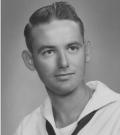 I had my
first contact with Bud Phillips back in 2000 when I was a young priest at St.
Joseph Catholic in downtown Lakeland. The Phillips’s didn’t worship there but
even as a young priest I had the need of hardware store. I remember what needed
fixing – my TV shelf had mysteriously detached itself from the wall. Rather
than tracking down our handyman, I took it upon myself to fix the shelf. Having
been in Lakeland only a short time, I went to the only hardware store I knew – the
one down the road by the Publix, in that shopping center where Edward
Scissorhands was filmed. And that was all I knew of Lakeland at the time.
I had my
first contact with Bud Phillips back in 2000 when I was a young priest at St.
Joseph Catholic in downtown Lakeland. The Phillips’s didn’t worship there but
even as a young priest I had the need of hardware store. I remember what needed
fixing – my TV shelf had mysteriously detached itself from the wall. Rather
than tracking down our handyman, I took it upon myself to fix the shelf. Having
been in Lakeland only a short time, I went to the only hardware store I knew – the
one down the road by the Publix, in that shopping center where Edward
Scissorhands was filmed. And that was all I knew of Lakeland at the time.
“Can I help
you find something?”
I think all
of us who have entered Crowder Bros. Ace Hardware can recall that question
being asked, perhaps by more than one helpful face. I related my dilemma. A few
heads got together. They open this drawer, then that one, then another. They
pulled a few items off the shelf. The man who first asked if I needed some help
handed me a little paper bag with a few numbers written on it, a few brackets,
and a packet of some plastic gizmo. I took the items with a smile and a nod,
not wanting to admit that I was as clueless as I really was.
“That should
get you through. Is there anything else,” he said with that famous Crowder
Bros. smile.
When I got
back to the rectory, with a screwdriver in hand and the handyman following me up
the stairs to my little room, there in that bag was everything that the handyman
needed to fix my little shelf.
What
service! I honestly don’t know if it was Bud who helped me that day; but I
consider that my first encounter with the man I would come to know a few years
later when I entered ministry at St. David’s Episcopal. You see, the service
and the smile and the courtesy and the pride and the demeanor of the hardware
store – it is the one and the same with man.
Carroll Copp
“Bud” Phillips began his earthly pilgrimage on March 10, 1929, a second
generation Tampa native. His earthly pilgrimage variously found Bud at Augusta
Military Academy, the University of Florida, and in service with the United
States Coast Guard. His earthly pilgrimage would grow, becoming larger
fifty-six years ago when Carolyn joined him on his way. Then came Beth, Bruce,
and Andrew. In 1973, he had made the long pilgrimage from his hometown in Tampa,
from his family’s wholesale hardware business, to Lakeland, joining John Crowder
on the retail hardware end in founding Crowder Bros. ACE Hardware.
I AM THE RESURRECTION - A BEAUTIFUL COMMENTARY ON FAITH
Now, today, we accompany Bub on the last stage of the pilgrimage of his earthly life. It was an earthly pilgrimage that included also baptism in the waters of new life where Bud was welcomed into the household of God, confirmation in the Spirit where Bud took his place in the community of the faithful, and Holy Eucharist where Bud had a foretaste of the eternal feast. I had the pleasure of sharing the most Holy Eucharist, the body and blood of our Lord Jesus Christ, with Bud on the Monday before he died. I believe that it was truly a viaticum for Bud, a meal of strength for the final phase of his journey. What a pleasure it was to share with Bud the bread of life and the cup of salvation – the promise of eternity given for us. Now we continue that pilgrimage in this St. David’s Episcopal Church, where Bud worshipped week after week for more than forty years. We assemble to pray to God for the pledge of our inheritance, the gift of eternal life with God and all the saints.
Now, today, we accompany Bub on the last stage of the pilgrimage of his earthly life. It was an earthly pilgrimage that included also baptism in the waters of new life where Bud was welcomed into the household of God, confirmation in the Spirit where Bud took his place in the community of the faithful, and Holy Eucharist where Bud had a foretaste of the eternal feast. I had the pleasure of sharing the most Holy Eucharist, the body and blood of our Lord Jesus Christ, with Bud on the Monday before he died. I believe that it was truly a viaticum for Bud, a meal of strength for the final phase of his journey. What a pleasure it was to share with Bud the bread of life and the cup of salvation – the promise of eternity given for us. Now we continue that pilgrimage in this St. David’s Episcopal Church, where Bud worshipped week after week for more than forty years. We assemble to pray to God for the pledge of our inheritance, the gift of eternal life with God and all the saints.
Listen again
to those words of eternal life that we hear in the Gathering Anthem. They are
the words spoken by Jesus to Martha:
I am Resurrection and I am Life, says the Lord.
Whoever has faith in me shall have life,
even though he die.
And everyone who has life,
and has committed himself to me in faith,
shall not die for ever.
Those words
are a beautiful commentary on the faith that Bud confessed and also a great
consolation for us at his death. With those words, Jesus reveals that the
resurrection is not so much about a fact or even about the event. It’s not, in
other words, about a confession or about understanding history. Rather, the
resurrection is more so about a relationship. The resurrection is about a relationship
with Jesus. “I am the resurrection,” Jesus tells Martha. Jesus is the
Resurrection. So, for us to experience the resurrection – for us to experience
the gift of eternal life, we must respond to this relationship. Jesus offers us
loving friendship. He promises that whoever lives in him, even if he dies, will
live. When Jesus tells us that those who believe in him will have eternal life,
belief is not about an assent to some heady principle or intellectual statement.
Belief is about adhering to Jesus, abiding in him as he abides in the Father.
We give great
and wonderful thanks that Bud took these words seriously. Jesus raised Lazarus
from the dead and that after he had been “in the tomb four days.” Jesus demonstrates
his power over life and death. But what Jesus has in store for us is so much more
than what Jesus did for Lazarus. Jesus resuscitated Lazarus from the dead but Lazarus
would die again. The resurrection and life that Jesus is and that Jesus offers
to us is so much more, greater than resuscitation to continued mortal
existence. Indeed, what Jesus promises is a resurrection to eternity, a life
that never ends, where you “shall not die forever.”
“Do you
believe this?” Jesus wants Martha to seize this truth and he wants to seize it
as well. Martha responds, “Yes, Lord. I have come to believe that you are the
Messiah, the Son of God, the one who is coming into the world.” Martha trusted
and was willing to abide in Jesus. In John, chapter 14, we hear the promise
again when Jesus implores, “Do not let your hearts be troubled. Believe in
God, believe also in me. If it were not so, would I have told you that I
go to prepare a place for you?” We all have the opportunity to reaffirm that
faith and to trust in that promised life as Bud did: in Jesus, the way and the
truth and the life.
A NEW HEAVEN AND A NEW EARTH
The reading from the Book of Revelation heard today points to that same life, the eternal life imagined in the quintessential “a new heaven and a new earth.” The image points to an eternal wedding banquet, a feast of love greater even than the love between Carolyn and Bud – and that was a mighty love, indeed. “See, the home of God is among mortal,” John writes. “He will dwell with them; they will be his peoples, and God himself will be with them.” You see, eternal life is a relationship with God whose love and life is forever. It is a place where Jesus “will wipe away every tear from their eyes.” In this new heaven and new earth, death itself is vanquished and the first things will pass away. In the new heaven and the new earth everything will be made new with a place will be prepared for us, a place to which Jesus will come and will take us – will take Bud – “so that where I am, there you may be also.”
The reading from the Book of Revelation heard today points to that same life, the eternal life imagined in the quintessential “a new heaven and a new earth.” The image points to an eternal wedding banquet, a feast of love greater even than the love between Carolyn and Bud – and that was a mighty love, indeed. “See, the home of God is among mortal,” John writes. “He will dwell with them; they will be his peoples, and God himself will be with them.” You see, eternal life is a relationship with God whose love and life is forever. It is a place where Jesus “will wipe away every tear from their eyes.” In this new heaven and new earth, death itself is vanquished and the first things will pass away. In the new heaven and the new earth everything will be made new with a place will be prepared for us, a place to which Jesus will come and will take us – will take Bud – “so that where I am, there you may be also.”
I am always
struck by the twenty-third psalm. It is at once highly romantic and very
brutally honest. “The Lord is my shepherd. I shall not want.” That is, I shall
not go without, I shall not lack. We have it all, with the Lord as our shepherd!
This was the faith of Bud. This is the faith of the church, a faith never
wavering. “Yea, though I walk through the valley of the shadow of death, I will
fear no evil, for thou art with me; they rod and they staff, they comfort me.” Bud
walked through a dark valley at his the end of his earthly life, but he never
walked alone. His wife walked with him. His children walked with him. His
church walked with him. But more than all that, the Lord walked with him. Bud
lived in the sure and certain hope that comes from faith, from the
determination he received in a relationship with One who triumphed even over
crucifixion. Bud believed in the One who brought him through the waters of
baptism, in whose name he was anointed with the oil of confirmation, and in the
One who preparest the Eucharistic table before him. Today in the midst of our
mourning, we remember that the Lord is our Shepherd, too, and even if we’re
stumbling in the dark valley, the Lord is with us to guide us just as he guided
Bud.
LET US PRAY
Lord Jesus Christ, by your death you took away the sting of death: Grant to us your servants so to follow in faith where you have led the way, that we may at length fall asleep peacefully in you and wake up in your likeness; for your tender mercies' sake. Amen.
Lord Jesus Christ, by your death you took away the sting of death: Grant to us your servants so to follow in faith where you have led the way, that we may at length fall asleep peacefully in you and wake up in your likeness; for your tender mercies' sake. Amen.
Subscribe to:
Posts (Atom)